Web Design Trends in 2026
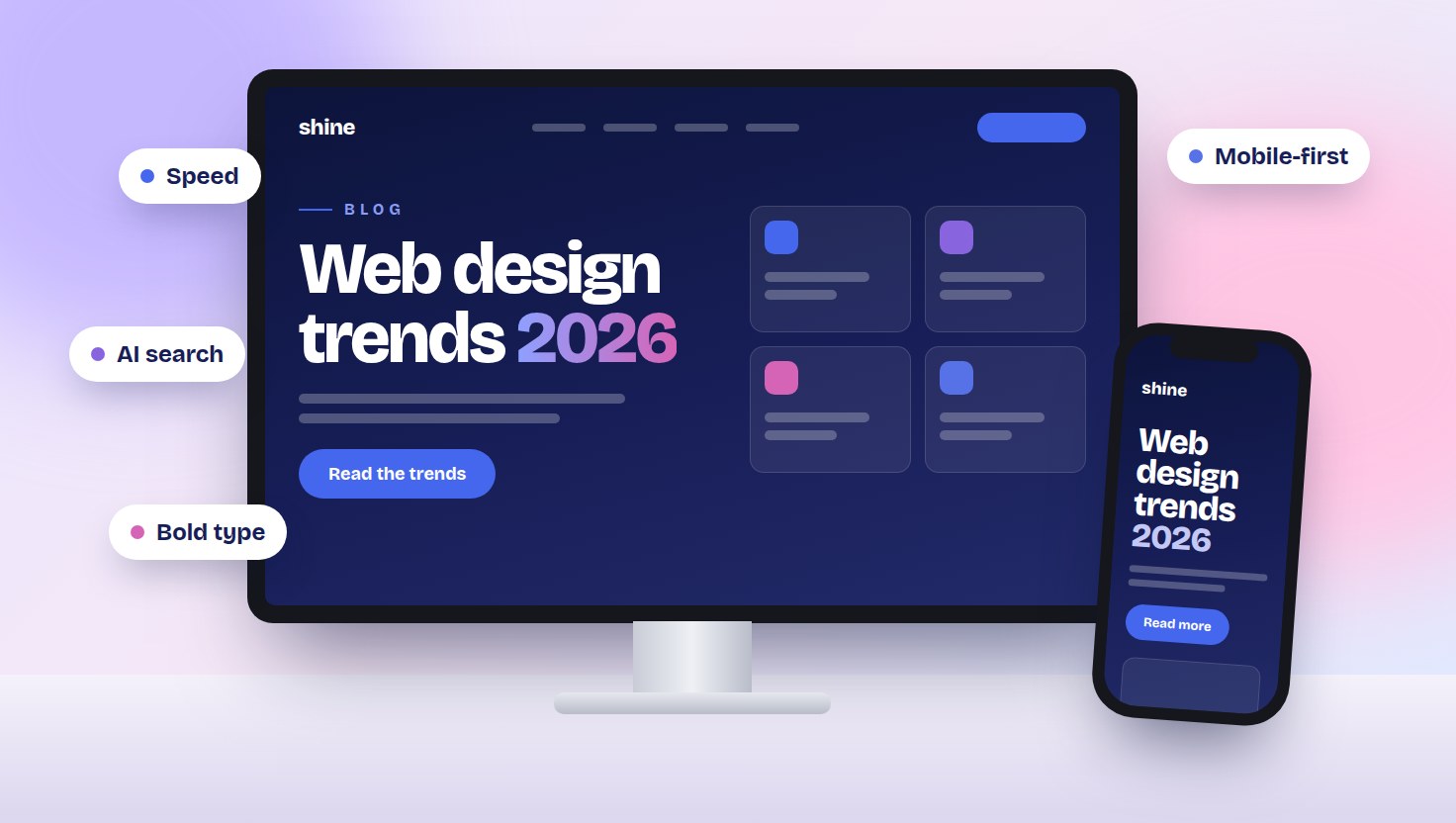
Every year brings a new list of web design trends. Most are about looks. The ones worth your attention in 2026 are the ones that change how many people find your website and how many of them get in touch.
Here is our pick of what matters this year for a small business website, and what we would ignore.
The short version
- Speed matters more than ever, and Google measures it.
- AI answers in Google mean your website needs to answer questions clearly.
- Mobile-first is still the baseline most sites fall short of.
- Bold typography and clean layouts are here to stay.
- Real photos and real reviews beat stock images.
1. Fast websites win
People expect a page to appear almost instantly, especially on a phone. Google measures how quickly your pages load and how quickly they respond when someone taps a button, and slow sites lose out in the results. The biggest culprits are oversized photos, heavy page builders and too many plugins. A lean, well-built site beats a flashy slow one every time.
2. Writing for AI search
Google now shows AI-written summaries at the top of many searches, and more people are asking tools like ChatGPT for recommendations. Both lean on websites that answer questions plainly. That means clear headings, straightforward answers to the questions customers actually ask, your services and the areas you cover spelled out, and proper structured data behind the scenes. A good FAQ section, like the one below, has never been more useful.
3. Mobile-first, properly
Everyone says their website is mobile-friendly. Far fewer are genuinely built for the phone first: tap-to-call numbers, buttons big enough for a thumb, short forms and nothing that pops up and covers the page. Try our 5-minute phone test to see how yours does.
4. Bold typography and clean layouts
Large, confident headings and plenty of space remain the look of 2026, and for good reason. They make a page easy to scan, which is how most people read online. The trick is choosing type that suits your business rather than copying whatever is fashionable.
5. Real people, real work
With AI-generated images everywhere, genuine photos of you, your team, your premises and your finished work stand out more than ever. Pair them with real Google reviews and visitors quickly get a sense of who they would be dealing with. It is one of the cheapest improvements you can make.
6. Subtle motion and dark mode
Small animations, such as a button responding when it is pressed or content easing into view, make a site feel polished. Dark designs, like this one, are popular too. Both work best in moderation. If an effect slows the page down or gets in the way of reading, it is costing you more than it gives.
What to ignore
Heavy full-screen video, clever scrolling effects and anything that makes people wait before they see what you do. They look impressive in a portfolio and lose enquiries in real life.
Is your website keeping up?
If your site was built more than a few years ago, some of these will be missing. Our free 15-point website checklist will show you where you stand in about ten minutes. If it points to a rebuild, a website re-design brings all of this up to date, and we have been doing that for businesses across Worcester, Kidderminster and the Midlands since 1999.
Common questions
Questions we get asked.
What are the top web design trends for 2026?
The trends that matter most for small businesses in 2026 are fast loading, writing clearly for AI search, genuinely mobile-first design, bold typography with clean layouts, and real photography and reviews.
How does AI search affect my website?
Google’s AI summaries and tools like ChatGPT draw on websites that answer questions clearly. Plain headings, direct answers, a good FAQ section and structured data all help your business get mentioned.
Why does website speed matter?
Visitors leave slow pages, particularly on phones, and Google takes speed into account when ranking sites. Smaller images and a lean build make the biggest difference.
What does mobile-first design mean?
Designing for the phone screen first, then scaling up to larger screens, so the site works well where most people see it first.
Can web design help my business in Worcestershire?
Yes. A fast, clear website that is easy to use on a phone and shows your reviews and local areas will bring in more enquiries from people searching nearby.
Is my website due a refresh?
If it is slow, awkward on a phone or hasn’t been updated in a few years, probably. Our free 15-point website checklist will tell you in about ten minutes.
Start here
Thinking about a new website?
A free assessment of your current site and a no-obligation quote within 24 hours — and you will be talking to a designer rather than a call centre.