7 Website Mistakes That Cost Small Businesses Enquiries
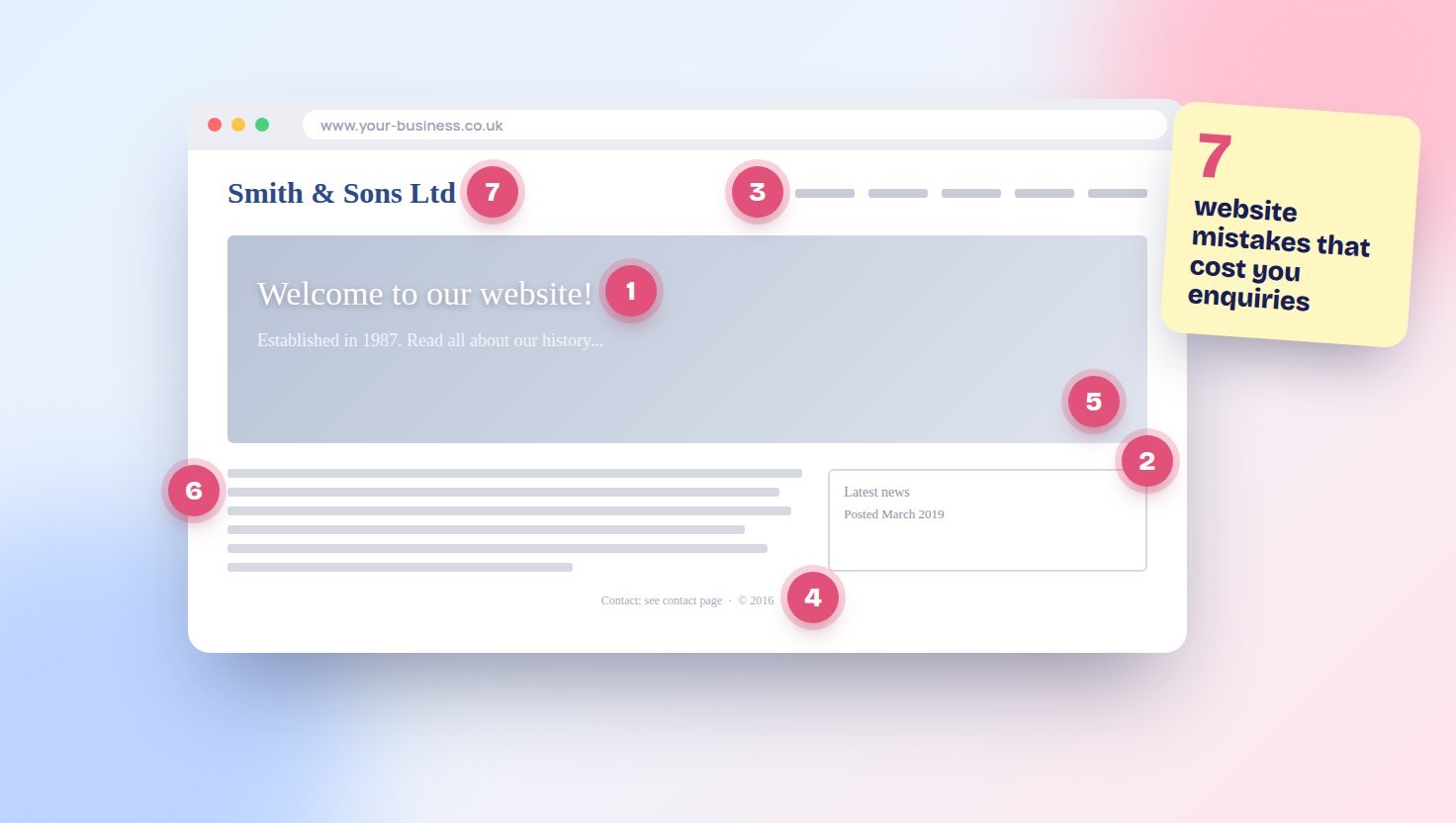
After 27 years and more than 1,500 websites, we see the same problems come up again and again. None of them are about the website looking old-fashioned. They are about people arriving, not finding what they need, and leaving without getting in touch.
Here are the seven we see most often, and what to do about each one.
1. It is built for the owner, not the customer
Many websites say a lot about the business and very little about what the visitor came to find out. Someone landing on your home page wants to know three things quickly: what you do, whether you can be trusted, and how to get in touch. If they have to read a history of the company first, many will not bother.
Read your home page as if you had never heard of your business. Does the first screen answer those three questions?
2. It is never updated
A “latest news” section from three years ago, last year’s prices or a team member who left long ago all tell visitors the same thing: nobody is looking after this. People wonder whether you are still trading. If updating the site is a chore, a self updateable website puts the everyday changes in your hands.
3. Mobile is an afterthought
Most people will look at your website on a phone first, often while they are out and about. If the text is tiny, the buttons are hard to tap or the phone number isn’t clickable, they will go back to Google and try the next business. We cover this in more detail in the 5-minute phone test.
4. Enquiring is hard work
Long contact forms, a phone number hidden on the contact page, or no clear next step at the bottom of each page all lose enquiries. Every page should end with an obvious way to get in touch, and the form should only ask for what you need to reply.
5. It looks like a generic template
Stock photos of people shaking hands and wording that could apply to any business in any town make it hard for visitors to remember you. Real photos of you, your work and your premises, and a few words about the places you work, go a long way.
6. Nobody tracks the numbers
Two questions we ask every business owner: how many people visited your website last month, and how many enquiries did it bring in? Most can’t answer either, which is no criticism, as nobody set it up for them. But without those numbers there is no way to tell whether the website is working or whether a change helped.
7. It undersells the business
This is the most common one of all. A business with years of experience, great reviews and a portfolio of work it should be proud of has a website that shows none of it. Put your reviews, your best work and your experience where people will see them.
How many is your website making?
If you recognised two or three of these, you are not alone, and most are straightforward to fix. Our free 15-point website checklist takes you through the checks we run on every site, with a simple score at the end so you know where you stand. If it turns out a rebuild is the better option, a website re-design is often simpler than people expect.
Start here
Thinking about a new website?
A free assessment of your current site and a no-obligation quote within 24 hours — and you will be talking to a designer rather than a call centre.